SNITT 2026 Equips Polman Negeri Babel Students to Face Energy Dynamics and Global Economic Transformation
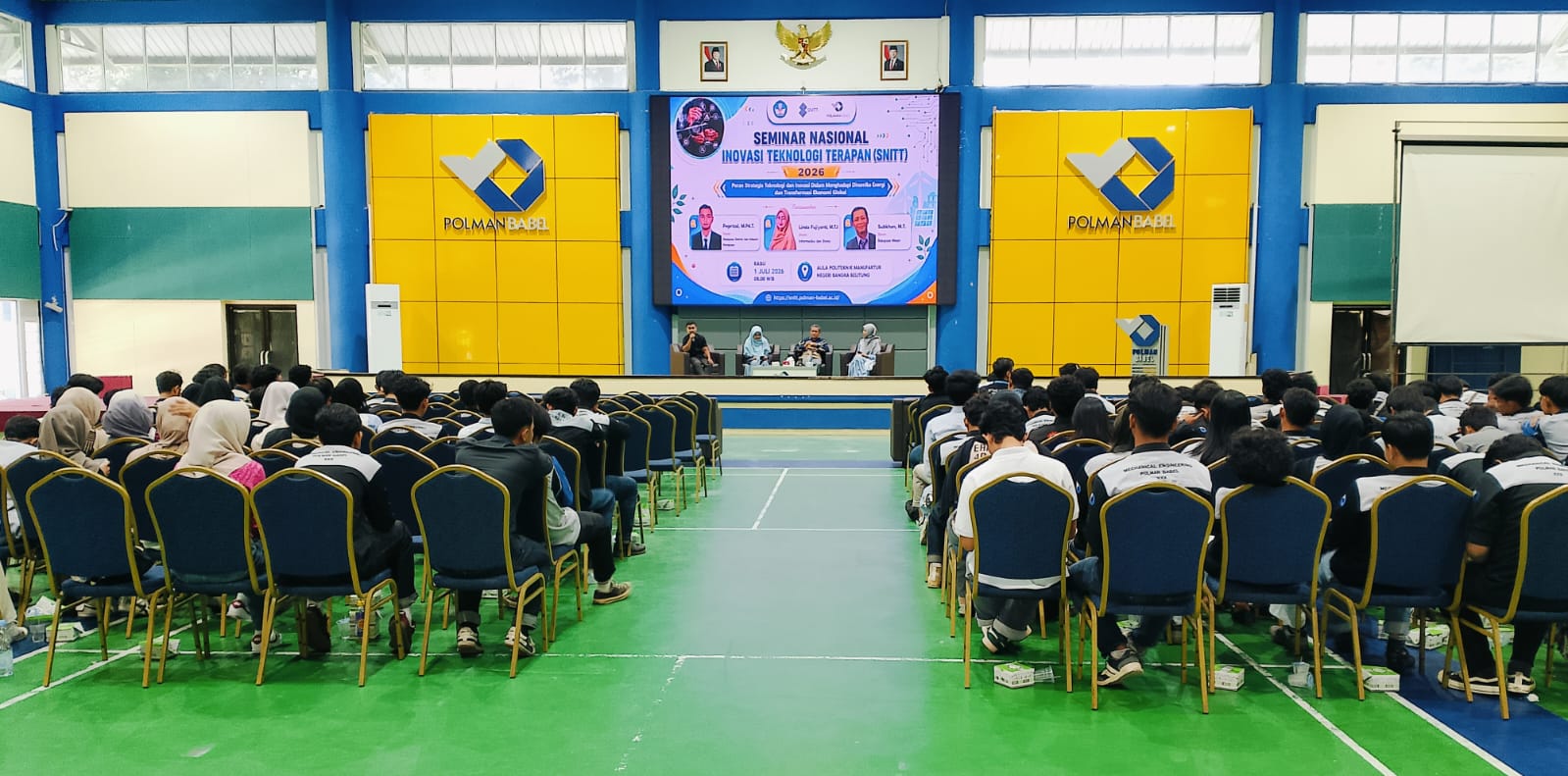
The three speakers at SNITT 2026—Subkhan, M.T., Linda Fujiyanti, M.T.I., and Peprizal, M.Pd.T.—sat at the front, presenting their material to hundreds of students from the Bangka Belitung State Manufacturing Polytechnic during the National Seminar on Applied Technology Innovation.
Diploma III students from the Bangka Belitung State Manufacturing Polytechnic (Polman Babel) attended the 2026 National Seminar on Applied Technology Innovation (SNITT). Held in the campus auditorium on Wednesday (July 1, 2026), the event focused on the strategic role of technology and innovation in navigating energy dynamics and global economic transformation, aiming to broaden students' horizons and prepare them for the challenges of an evolving industrial landscape.
The 160 participants came from the Mechanical Engineering Department—specifically the Electronics Engineering, Mechanical Design Engineering, and Machine Maintenance and Repair study programs—and engaged with three speakers: Subkhan, M.T., Linda Fujiyanti, M.T.I., and Peprizal, M.Pd.T., who discussed various technological innovations.
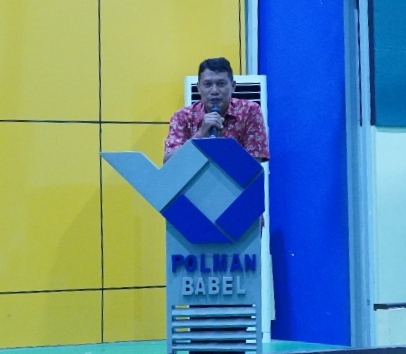
The seminar was opened by the Deputy Director III of Polman Babel, Eko Sulistyo, M.T. In his remarks, he stated that the seminar aims to encourage students to produce scholarly work suitable for public publication following evaluation by the SNITT team, emphasizing that student research outcomes must deliver tangible benefits.
Eko advised the final-year Diploma III students not to stop developing their skills after completing their coursework. He expressed his hope that Polman Babel graduates would continue to innovate and enhance their competencies, remaining ready to compete in the job market or pursue higher education.
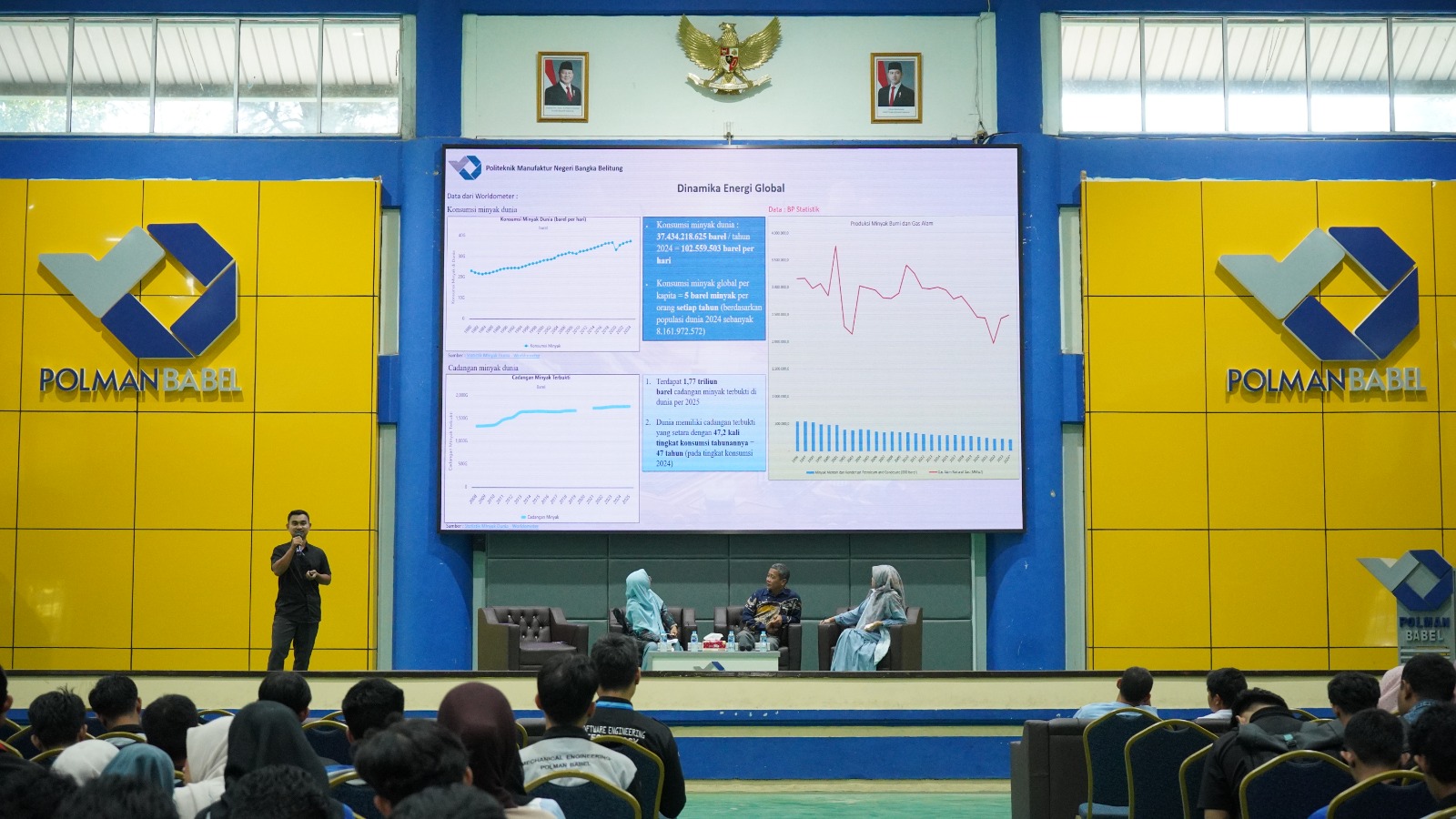
During the first session, speaker Peprizal, M.Pd.T., explained the dynamics of energy and the global economic transformation—specifically the situation in Indonesia, where high fuel consumption remains a factor. He noted that energy price instability can trigger inflation and drive up production and transportation costs, ultimately leading to price hikes for goods and services that directly impact the national economy.
He further highlighted that technology and innovation offer crucial solutions to these challenges by enhancing energy efficiency and energy independence, improving energy monitoring and control systems, and reducing environmental emissions.
"Strengthening national energy resilience is considered a vital foundation for sustainable economic development," he added.
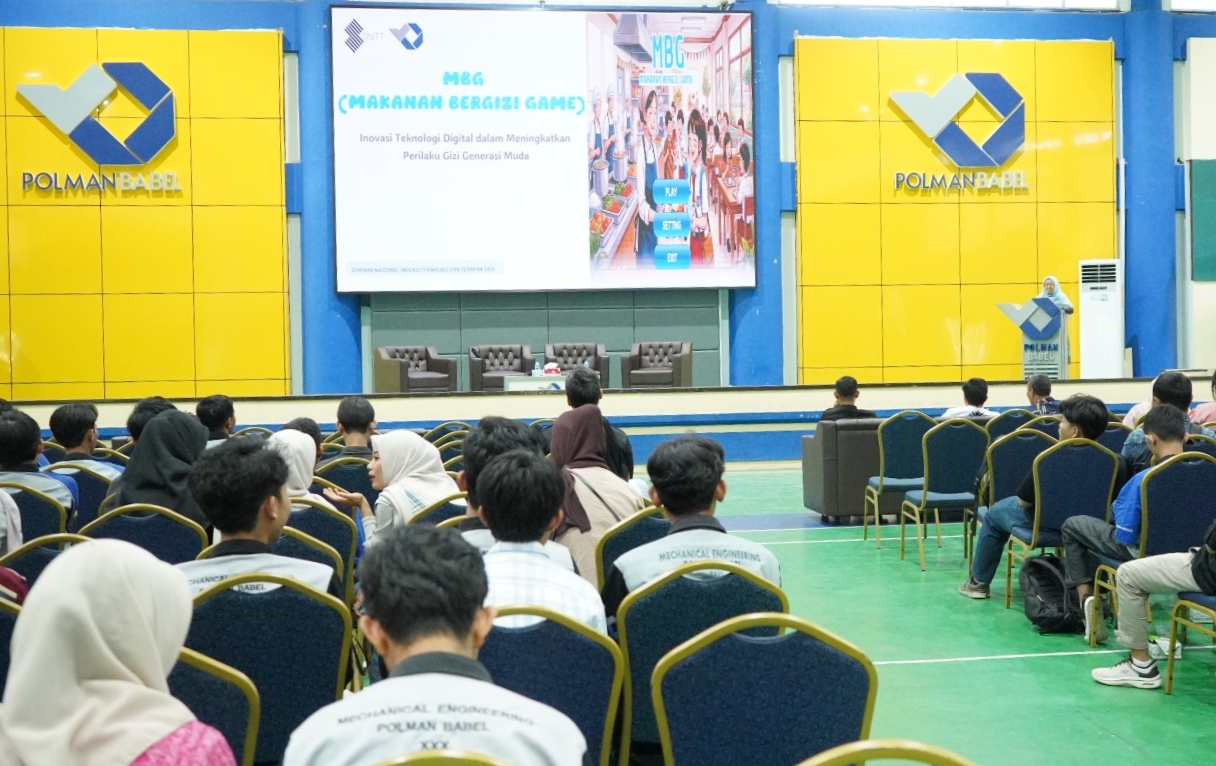
Meanwhile, Linda Fujiyanti, M.T.I., presented research findings on the use of digital technology—specifically educational games—to address nutritional needs. She explained that low levels of nutritional knowledge and declining physical activity create a need for innovations such as educational games capable of calculating personalized nutritional requirements.
Furthermore, the development of nutritional education games aims not only to improve knowledge regarding healthy eating habits but also to foster better consumption behaviors, thereby encouraging students to develop various innovations.
"From mobile applications and AI-powered nutrition chatbots to nutrition monitoring dashboards, games serve not merely as entertainment but also as effective educational tools," he explained.
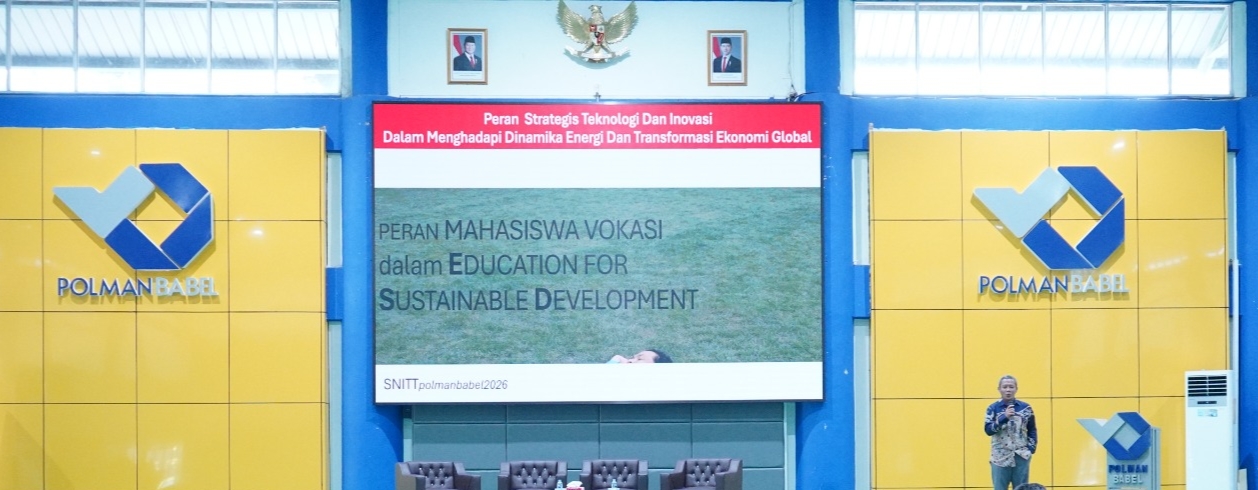
In contrast to the previous two speakers, Subkhan, M.T., highlighted the concept of Education for Sustainable Development (ESD)—an educational approach that equips learners with the knowledge, skills, values, and attitudes needed to contribute to a just, resilient, and sustainable society," he stated.
"Consequently, vocational graduates must possess competencies relevant to industry needs while also demonstrating discipline, strong communication and teamwork skills, problem-solving abilities, and unwavering integrity," he noted.
"At the conclusion of the seminar, students raised questions covering topics ranging from energy issues and innovative nutritional games to the implementation of ESD at Bangka Belitung's premier vocational institution—specifically through Polman Babel’s SNITT 2026—aiming to further encourage students to create innovations that address global challenges and make tangible contributions to the nation's future development," Subkhan concluded.