No Need to Move Away: Polman Negeri Babel Diploma III Alumni Can Pursue Applied Bachelor's Degrees at Their Own Campus
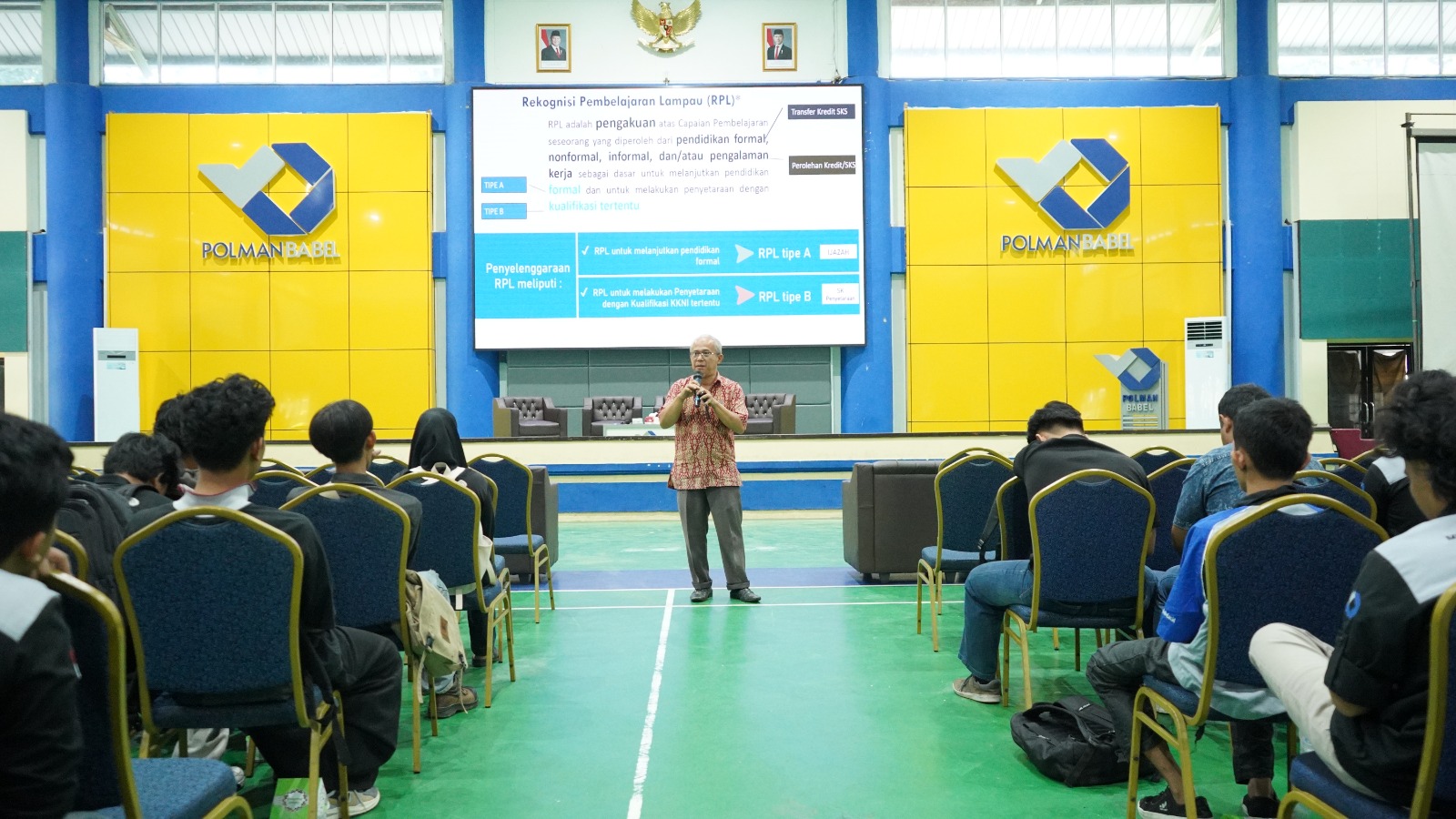
Somawardi, M.T., Head of the Academic, Student Affairs, and Cooperation Division at the Bangka Belitung State Manufacturing Polytechnic (Polman Negeri Babel), outlined opportunities for active Diploma III students to continue their studies through the Recognition of Prior Learning (RPL) program.
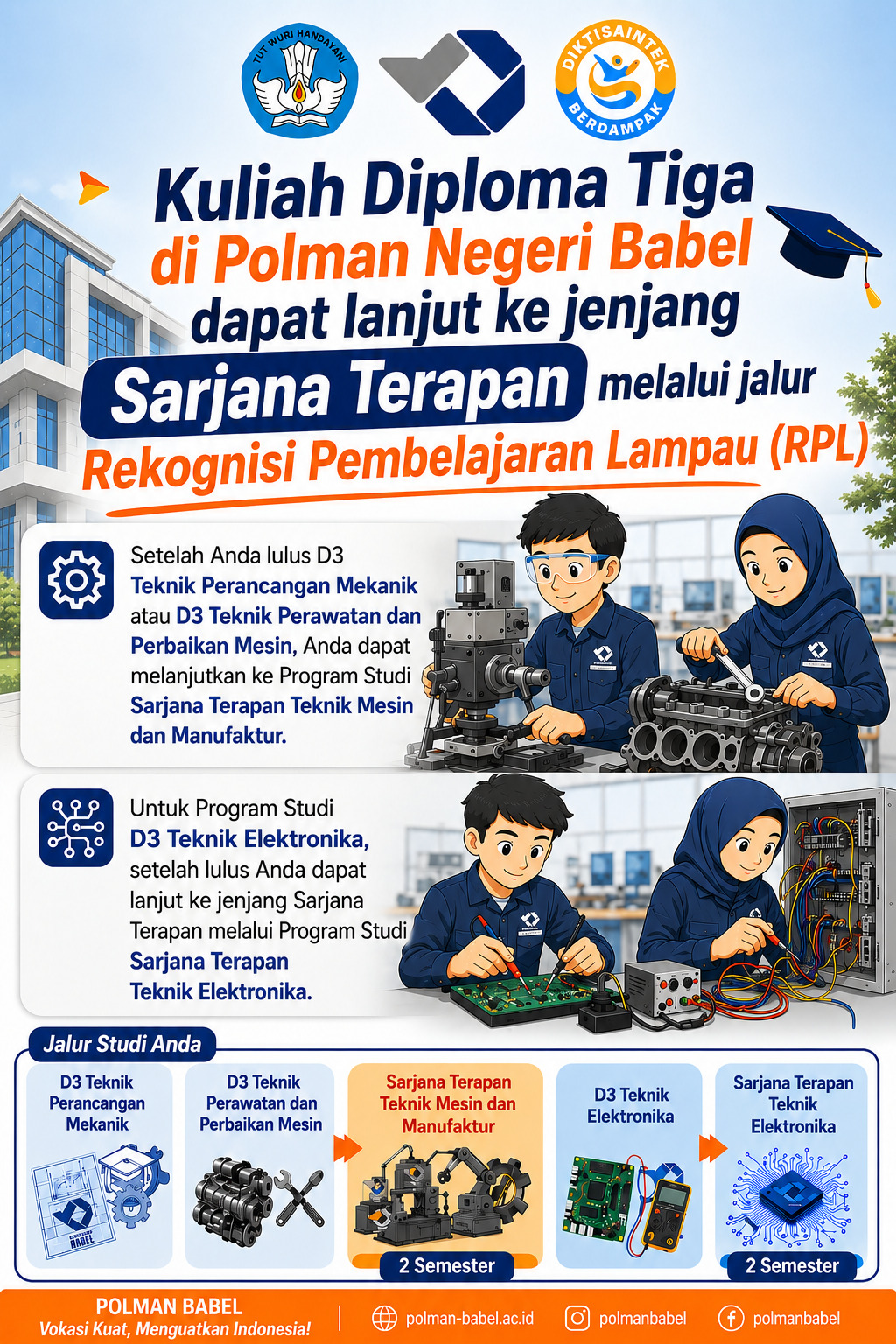
There is good news for Diploma III alumni of the Bangka Belitung State Manufacturing Polytechnic (Polman Negeri Babel): they no longer need to travel far outside the region to pursue an Applied Bachelor’s degree (D-IV), thanks to the availability of the Recognition of Prior Learning (RPL) program.
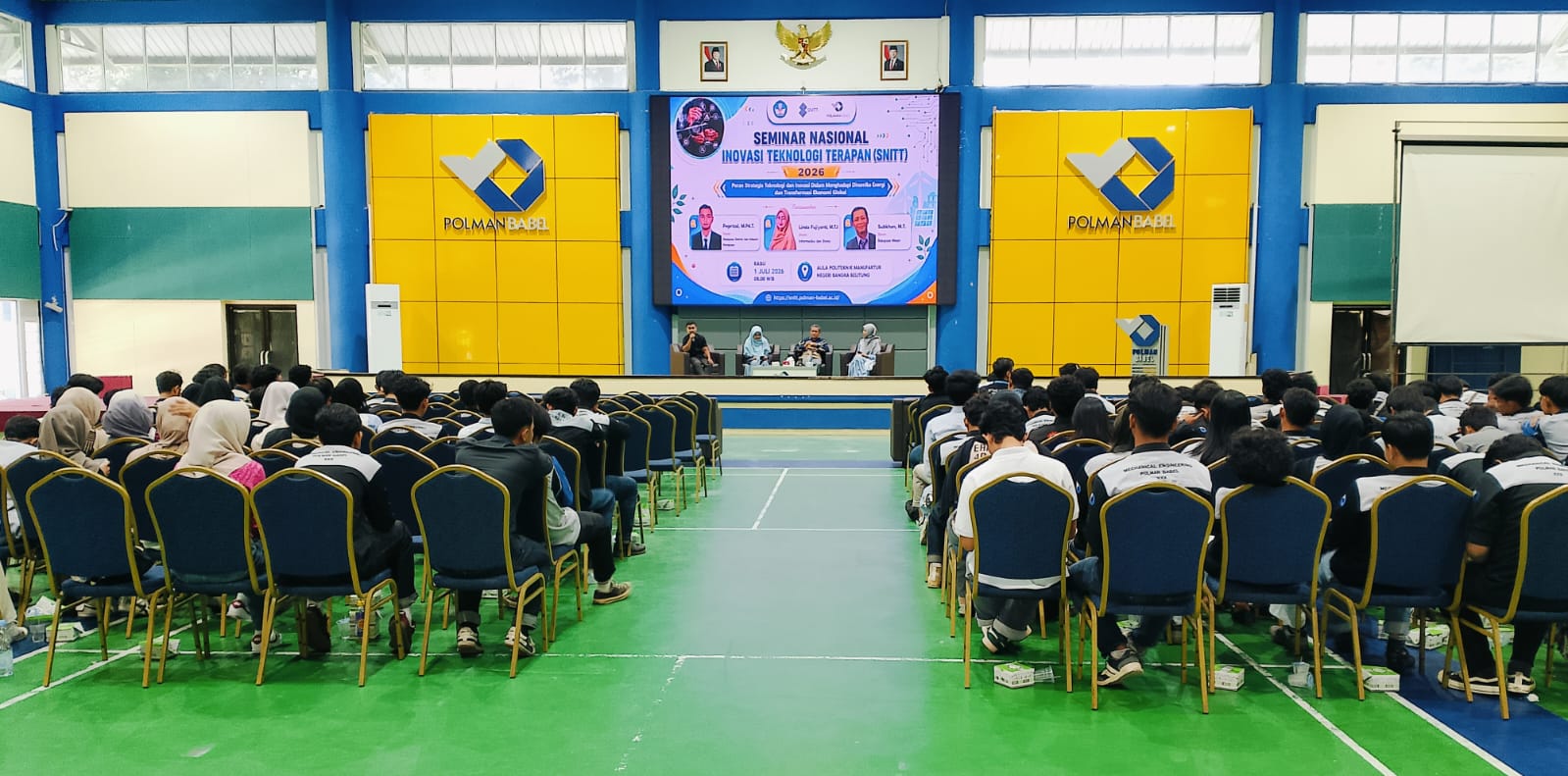
Information regarding this program was shared with current Diploma III students on Wednesday (July 1, 2026) at the Polman Negeri Babel auditorium—the leading vocational campus in Bangka Belitung. The session aimed to equip students with the necessary information to plan their further studies before completing their current program.
Somawardi, M.T., Head of the Academic, Student Affairs, and Cooperation Division at Polman Negeri Babel, stated that the RPL program offers a solution for Diploma III graduates to advance to an Applied Bachelor’s degree (D-IV) with a study duration of approximately one year.
He explained that two study programs are available via the RPL pathway—Applied Bachelor of Mechanical and Manufacturing Engineering and Applied Bachelor of Electronics Engineering—designed to meet the needs of industrial companies and government agencies by ensuring the workforce possesses higher levels of competence and educational qualifications.
Somawardi explained that registration is conducted online and requires the submission of an RPL application form, a curriculum vitae, and a self-evaluation document regarding the courses proposed for recognition; these documents serve as the basis for assessing the prospective student's existing learning outcomes.
He further explained that the RPL program comprises two schemes: RPL Type A, intended for graduates wishing to pursue formal education with the same study structure as regular students; and RPL Type B, a qualification equivalency pathway aligned with the Indonesian National Qualifications Framework (KKNI).
Moreover, alumni work experience adds value to the recognition process; competencies gained during employment can be acknowledged as part of the learning outcomes, thereby making the study period more effective and efficient.