Learning Directly at the Source, Polman Negeri Babel Students Explore PT Timah Muntok's Production Kitchen
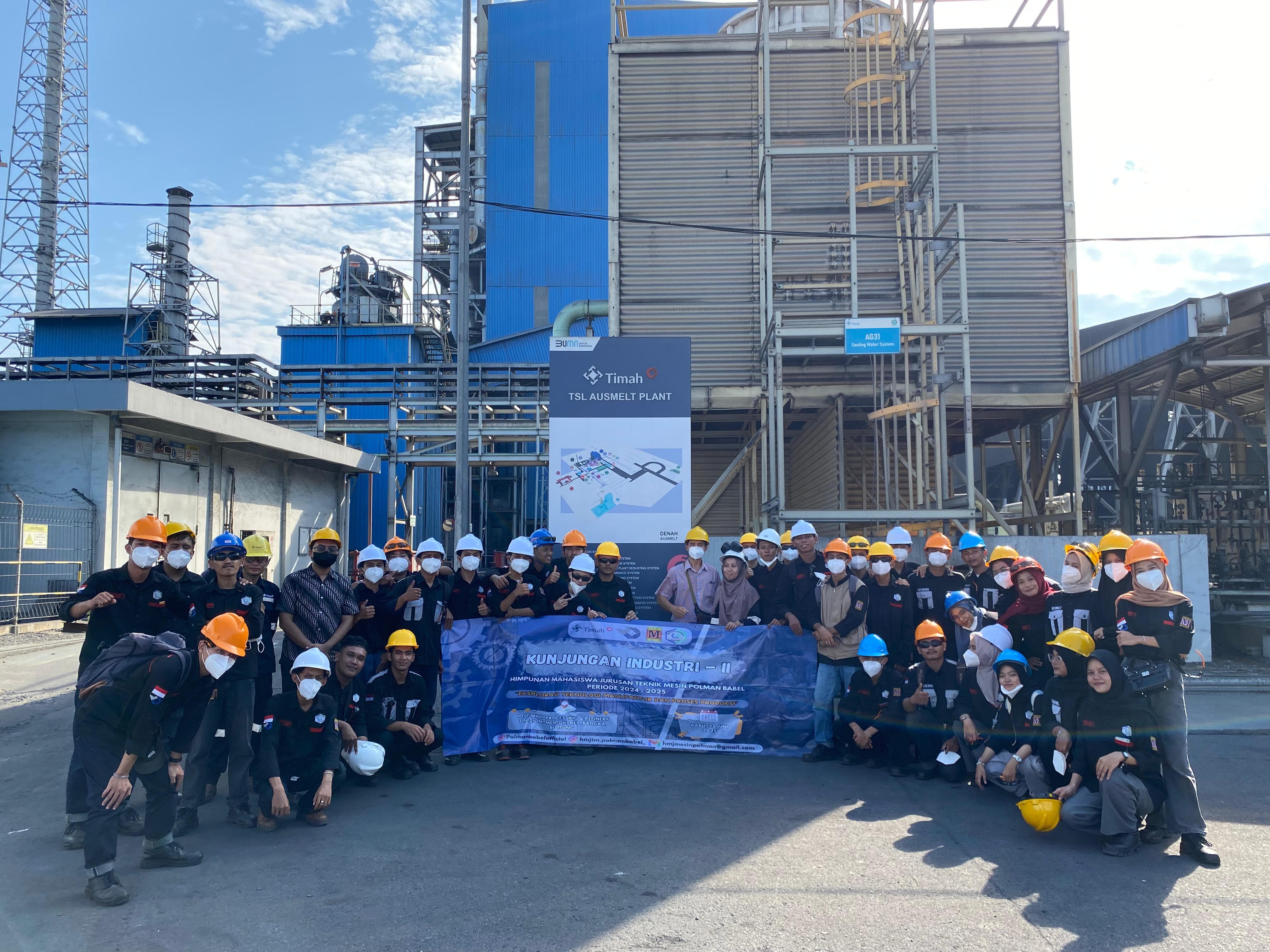
Students of the Mechanical Engineering Department of Polman Negeri Babel took a photo with the technical team of PT Timah Tbk, Muntok Metallurgy Unit, after the industrial visit session.
Students from the Mechanical Engineering Student Association of the Bangka Belitung State Manufacturing Polytechnic (Polman Babel) participated in an industrial visit to PT Timah Tbk, Muntok Metallurgy Unit, Processing and Refinery Division, Wednesday (06/24/2025).
This activity was attended by 38 students from the Applied Bachelor of Manufacturing Engineering Technology Study Program (D-IV TMM and RPM) and the Diploma III Program in Machine Manufacturing and Maintenance Engineering (TPPM and TPcM), accompanied by two supervising lecturers, Harwadi, M.Ed. and Ilham Nur Dimas Yahya, M.T.
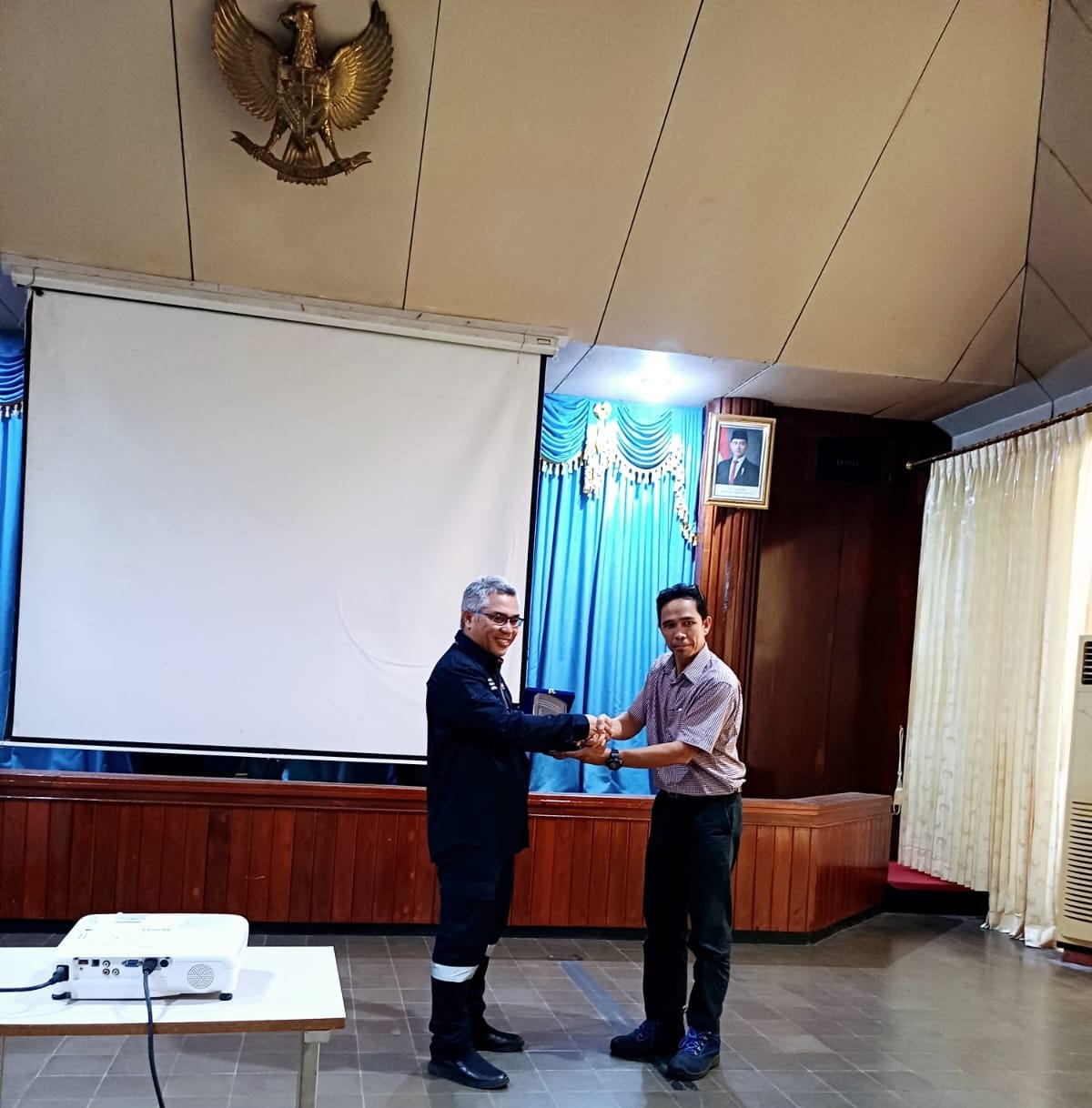
The group was welcomed directly by Sofian as the Head of the Processing and Refinery Division along with the management and technicians of PT Timah. This warm welcome opened up opportunities for direct discussions between students and industrial employees with the technical team who invited students to explore the production area and introduce the work process in the factory.
As a Supervisor, Thursday (26/06/2025) Harwadi, M.Ed. said that this visit was not just an annual agenda, but a real form of campus synergy with the industrial world.
"Students need direct experience. Learn from living machines, not just from presentation slides," he said.
Not stopping there, Harwadi added that this visit also sparked the enthusiasm of students to explore innovations in local-based manufacturing technology and students not only know, but can think critically about the tin production process," he continued.
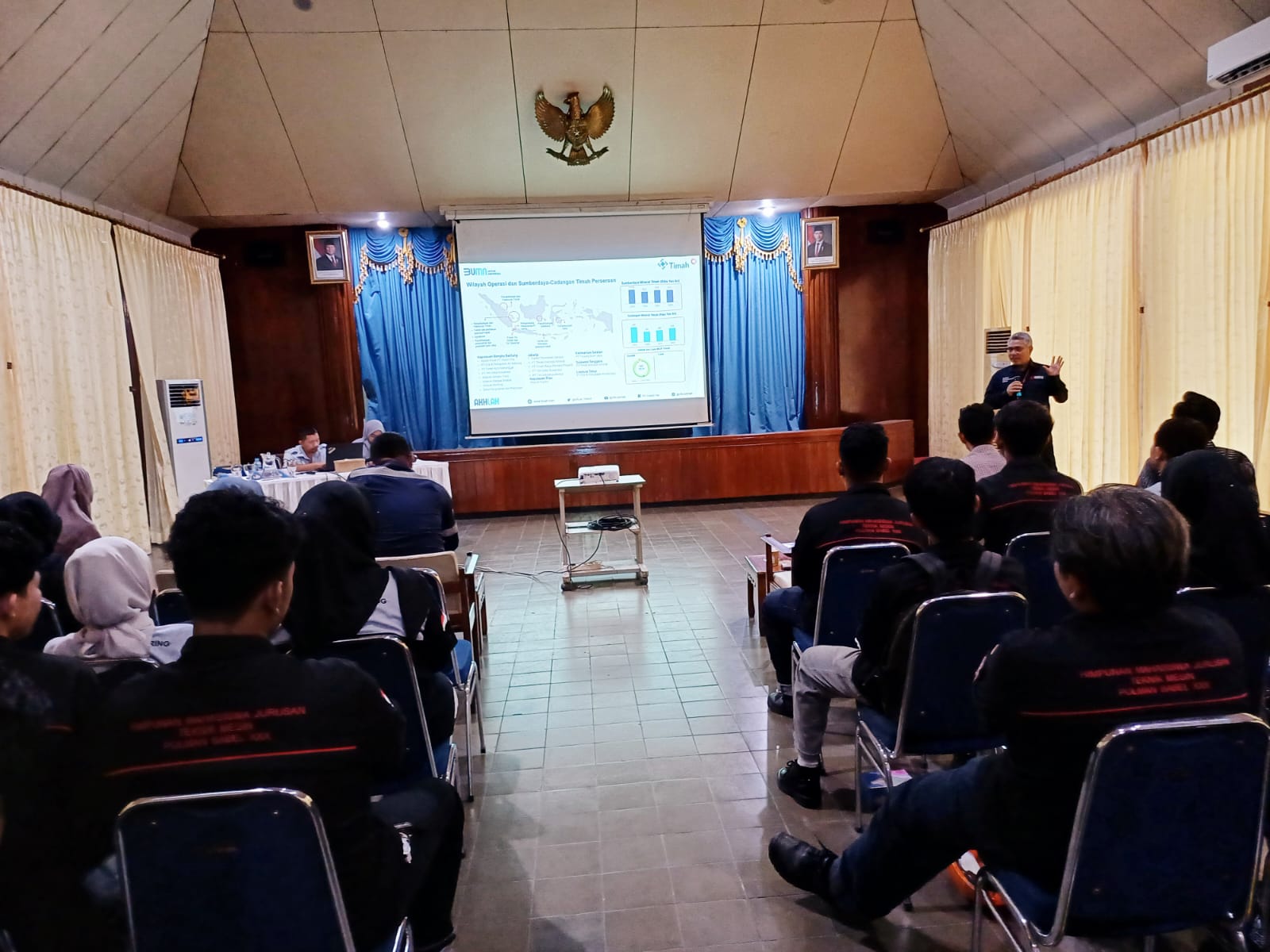
In the presentation session, Sofian explained the flow of the tin production process at PT Timah Tbk Muntok which is not only oriented towards the final result in the form of pure tin metal, but also prioritizes energy efficiency and responsible waste management in every stage from smelting, refining to printing. The company uses an integrated control system to monitor temperature, pressure, and chemical composition in real time to maintain product quality and consistency according to export standards.
"So far, students may have only imagined the refining process in books, today they are witnessing the reality," he said.
He also opened a question and answer session regarding operational challenges and energy efficiency in the smelting process, it turns out that many want to know more, we are happy to be able to share," he added.
Furthermore, Sofian explained that all operational activities are designed to minimize environmental impact, one of which is by reusing waste heat (waste heat recovery) and implementing exhaust gas filtration technology.
"Not only thinking about production, but also sustainability, we must understand that modern industry can no longer ignore environmental aspects," he stressed.