Research Results of Polman Negeri Babel Lecturers Applied in Teacher Competency Training Through CAKRA-21
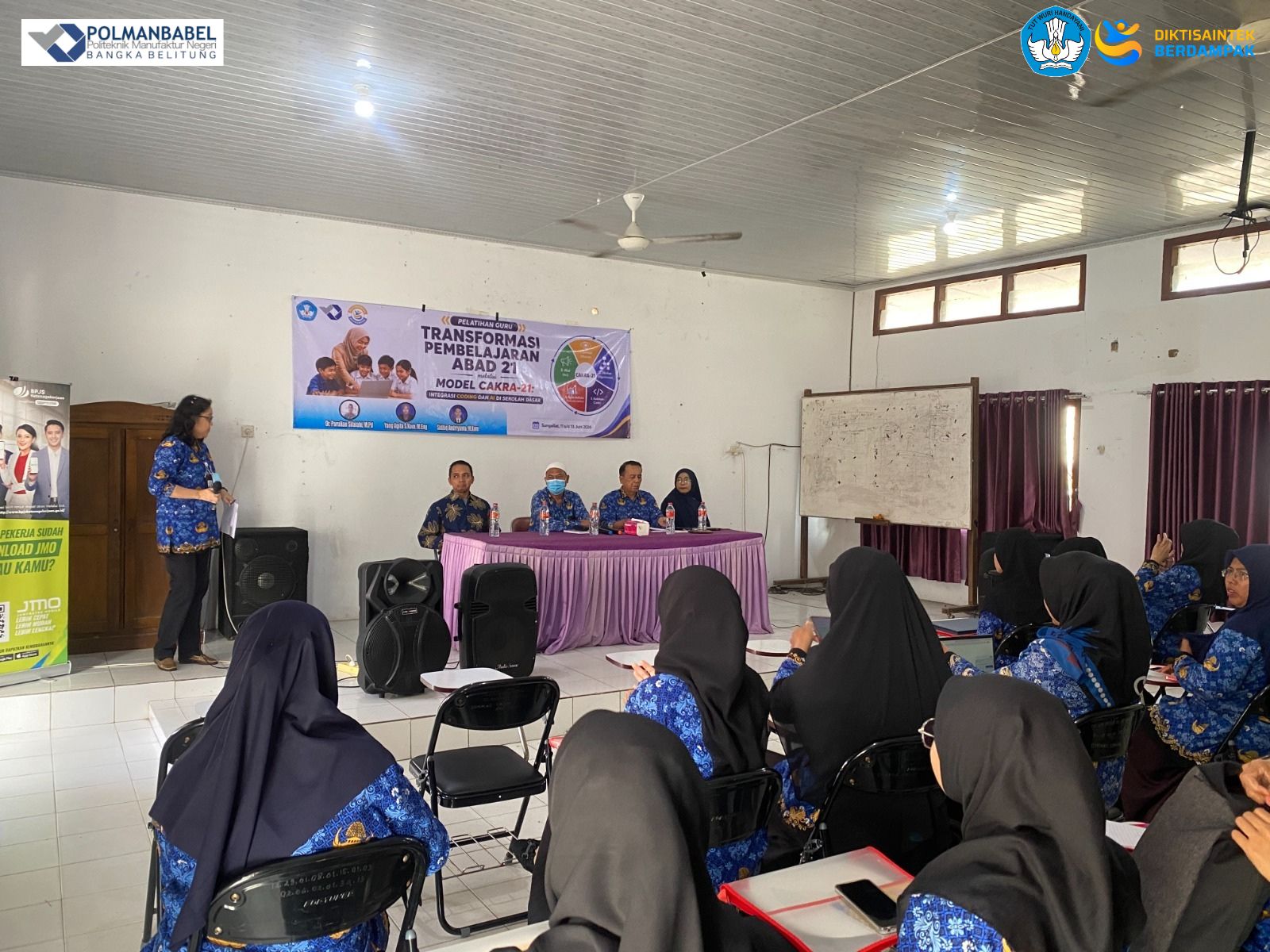
A lecturer from Polman Negeri Babel presented the results of the Cakra 21 research to elementary school teachers at the Bangka Regency Education Office.
In an effort to improve the quality of relevant education, lecturers at the Bangka Belitung State Manufacturing Polytechnic held teacher training based on the CAKRA-21 model (Observe, Flow, Code, Ratio-Reflection, and Action) at the Bangka Regency Education Office on Saturday (June 13, 2026).
This activity, part of the research findings of Polman Babel lecturers, aims to strengthen teacher competency in facing the challenges of learning in the digital era. Twenty-one elementary school teachers from three sub-districts in Bangka Regency participated.
The team of lecturers, Dr. Parulian Silalahi, M.Pd., Yang Agita Rindri, M.Eng., and Sidhiq Andriyanto, M.Kom., equipped teachers with more adaptive pedagogical skills, including computational thinking skills and artificial intelligence literacy.
When contacted for confirmation on Wednesday (June 17, 2026), the head of the event, Dr. Parulian Silalahi, M.Pd., explained that the CAKRA-21 model was developed as a learning approach that is able to answer the needs of today's education so that it is designed to encourage students to be more active, creative, critical, and innovative in the learning process of Observing, Algorithmizing, Code, Rationalizing-Reflecting, and Acting," he explained.
"In the Cermati phase, students are encouraged to develop curiosity through observation activities, where they are trained to systematically develop problem-solving steps using a computational thinking approach. The Kodekan phase focuses on developing creative and applicable solutions or learning products," he admitted.
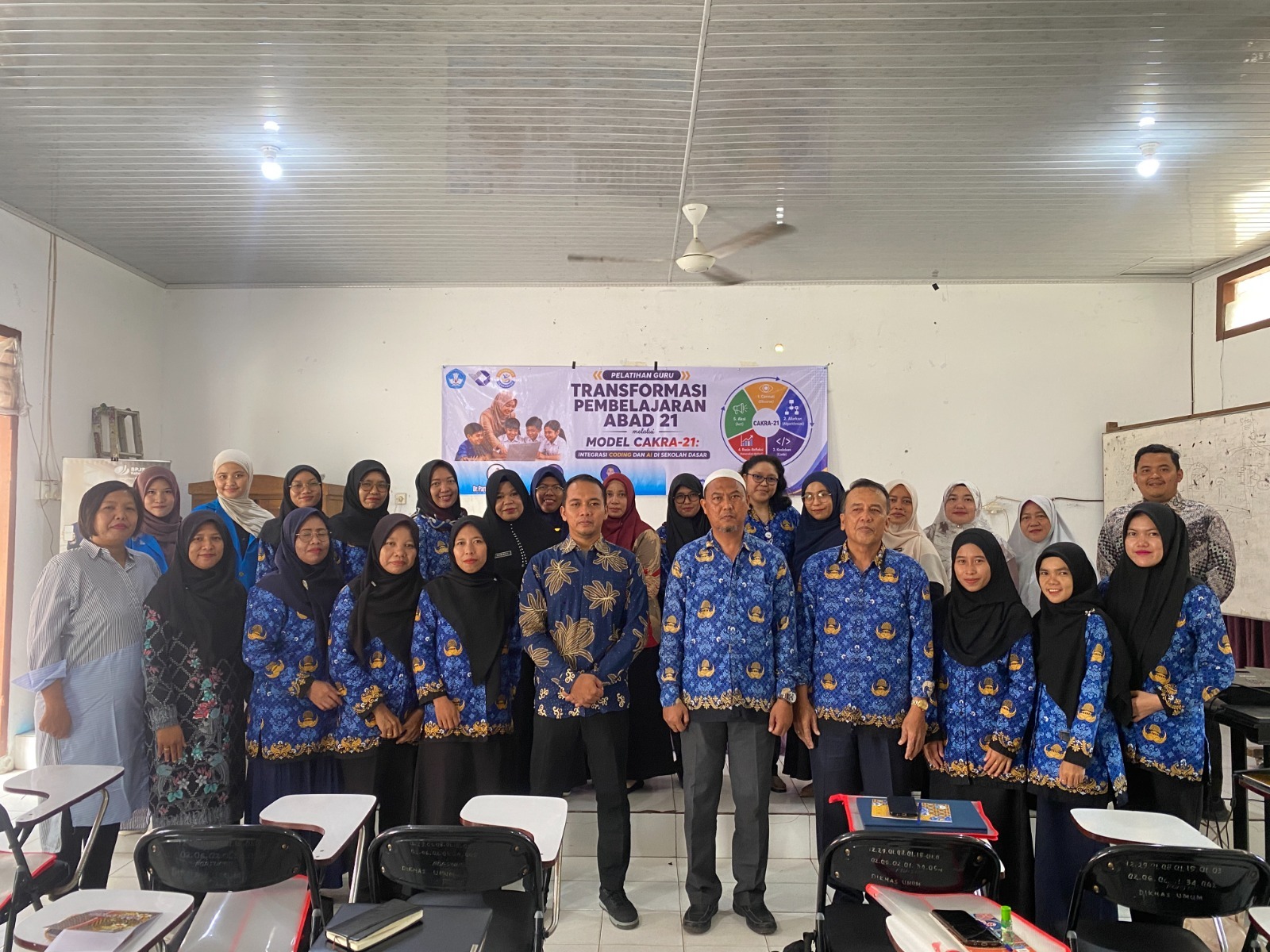
Meanwhile, the Ratio-Reflection phase is used to evaluate and improve the work produced. The Action phase is the stage of implementing learning outcomes in real life, enabling students to directly connect theory with practice," he explained.
During the training, participants received various materials, ranging from an introduction to the CAKRA-21 concept, the integration of Computational Thinking, AI literacy, to the development of learning tools such as Lesson Plans (RPP), Student Worksheets (LKPD), assessment instruments, and technology-based learning media.
"While receiving the materials, the teachers engaged in hands-on practice by developing learning materials for their respective subjects. The training was interactive, characterized by active discussions, sharing of experiences, and collaboration among participants in designing more innovative and contextual learning," he said.
Furthermore, this training is designed to ensure teachers not only understand the concepts but also apply them in the classroom. We hope that teachers can become agents of change, encouraging meaningful, adaptive learning that aligns with developments in science and technology," Parulian concluded.