Addressing Public Service Risks in the Era of Digital Technology and Social Media: Polman Negeri Babel Hosts Workshop with the Ombudsman of the Republic of Indonesia
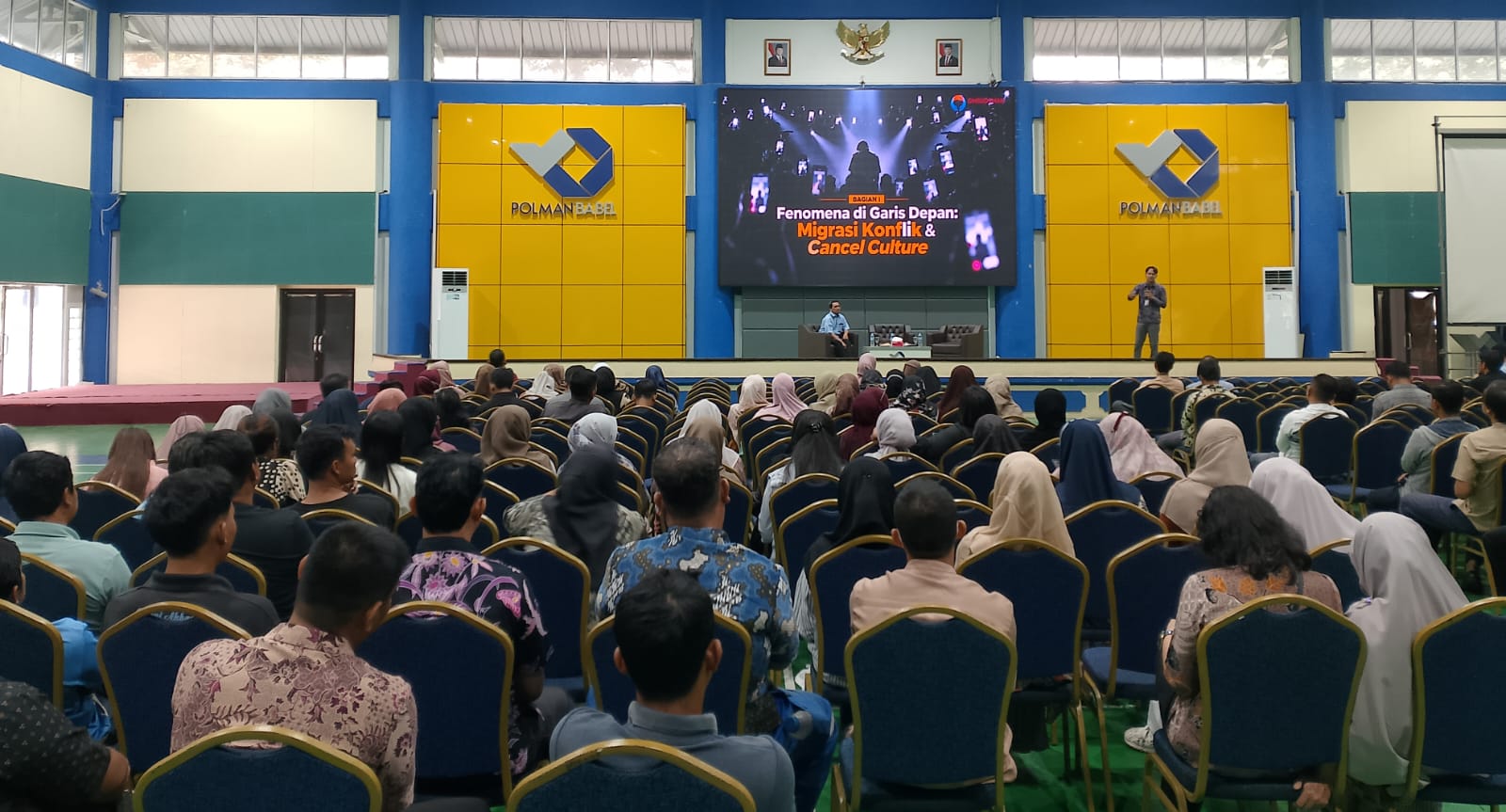
The Acting Head of the Ombudsman of the Republic of Indonesia (Bangka Belitung Representative Office), KGS Chris Fither, S.H., presented a session on the risks and challenges of public service in the era of digital information and social media to all staff of the Bangka Belitung State Polytechnic (Polman Negeri Babel) in the institution's auditorium.
The Bangka Belitung State Manufacturing Polytechnic (Polman Negeri Babel) held a public service workshop on Friday (October 16, 2026) in its auditorium, in collaboration with the Bangka Belitung Representative Office of the Ombudsman of the Republic of Indonesia. The event was attended by staff, faculty members, and educational support personnel.
The workshop aimed to enhance the academic community's understanding of the challenges surrounding public service in the digital era, specifically regarding the maintenance of professionalism, ethics, and caution when using social media.
In his opening remarks, the Director of Polman Negeri Babel, I Made Andik Setiawan, Ph.D., urged all staff to be wiser and more careful in their use of social media. Noting that social media has become an integral part of daily life, he emphasized that users must be aware of the potential impact of the information they share and the activities they engage in publicly.
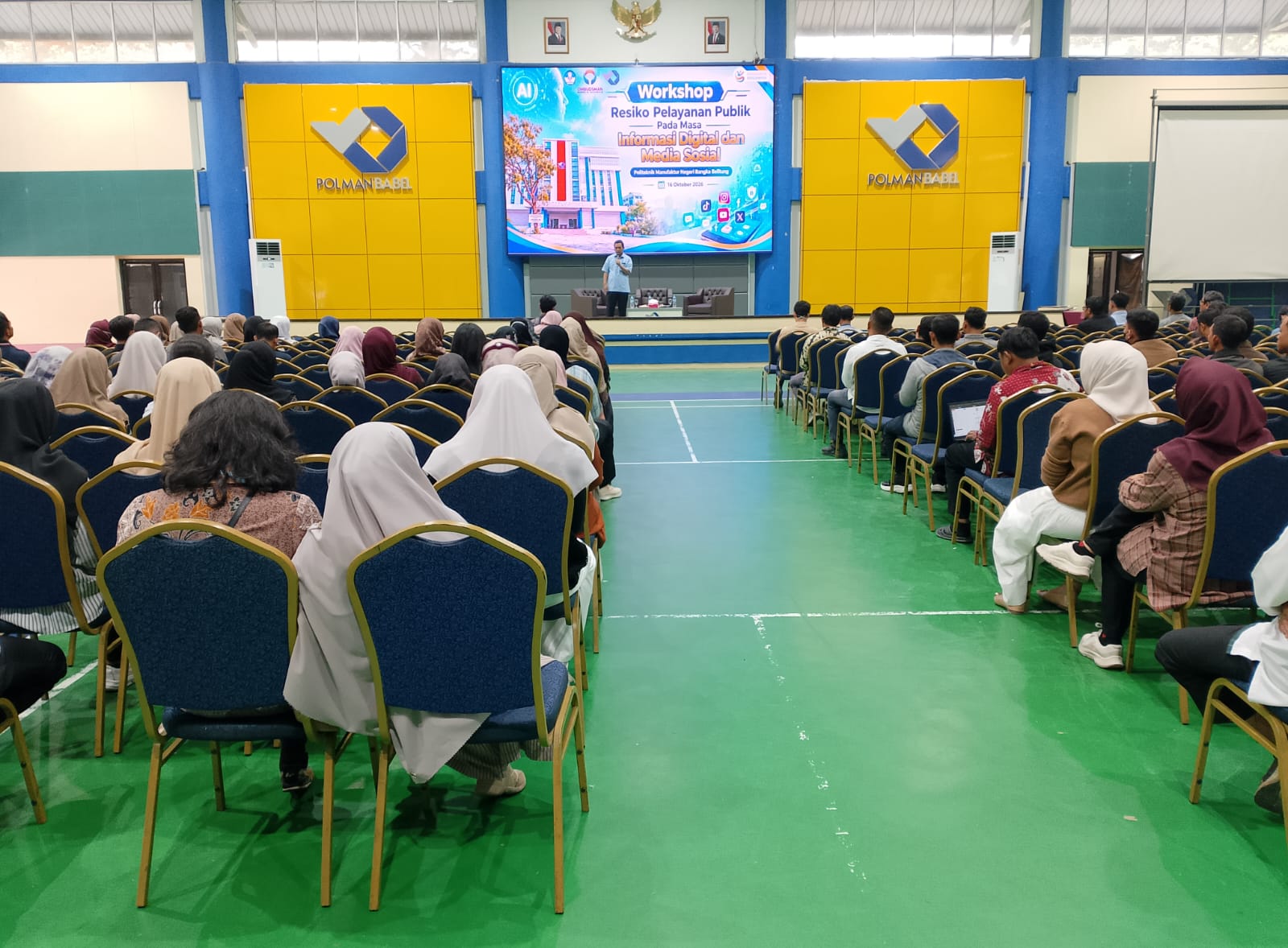
He stressed that vigilance in carrying out public service duties is essential for every employee. This is crucial to ensure that issues arising within the workplace do not escalate into public controversies on social media, which could damage an individual's image and reputation.
" It would be a great pity if an employee who has dedicated years—or even decades—to excellent service ends up seeing their hard-earned reputation and character destroyed," he remarked.
Meanwhile, the Acting Head of the Ombudsman of the Republic of Indonesia’s Bangka Belitung Representative Office, KGS Chris Fither, S.H., outlined several challenges for public service in the context of evolving information technology and social media. The workshop covered seven key topics, ranging from the phenomena of conflict and "cancel culture" and the role of algorithms in amplifying the spread of information, to the emergence of artificial intelligence (AI) and the inherent uncertainties within the digital space.
The discussion also covered constitutional issues, the asymmetrical burden placed on public service providers, the 'chilling effect,' the tendency to impose excessive sanctions driven by panic, and mitigation strategies for managing various risks," he added.
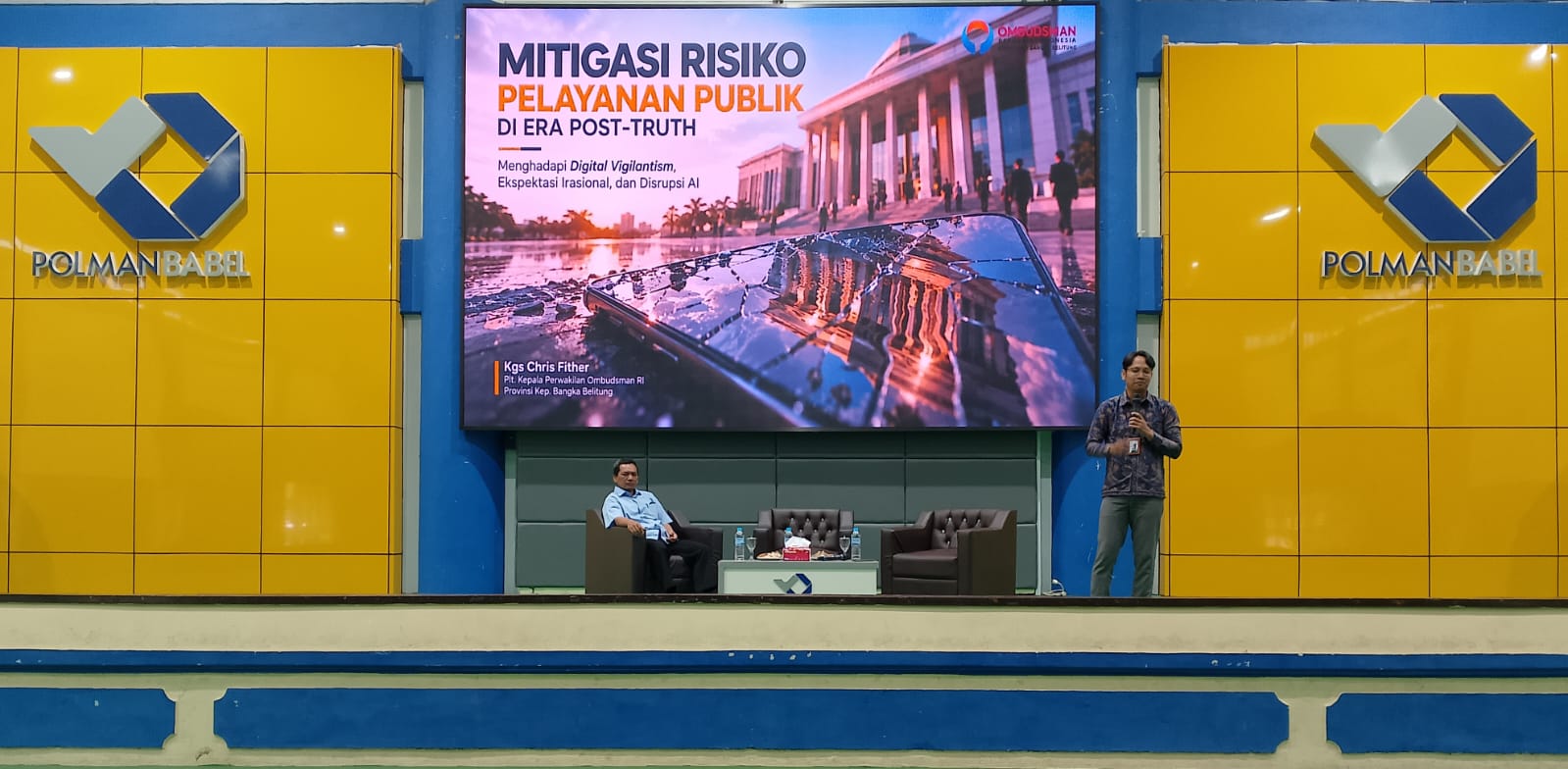
Fither also highlighted the importance of ethics in social media interactions, referencing a 2021 study by Microsoft that ranked Indonesia 29th out of 32 countries in terms of digital civility—noting that the inherent friendliness of the Indonesian people in daily life should be matched by polite behavior in the digital space.
" High levels of social media usage must be accompanied by an awareness of the need to express opinions responsibly, avoid comments that could harm others, and carefully consider the impact of every post," he concluded.
As the workshop drew to a close, it was emphasized that staff at the Bangka Belitung State Manufacturing Polytechnic (Polman Negeri Babel) should gain a deeper understanding of the importance of maintaining ethical communication, professionalism, and high-quality public service—both in direct interactions with the public and when engaging on social media.