Internal Monitoring and Evaluation by Bestari Saintek: Assessment of the Polman Negeri Babel Lecturer Team's Research on Rehabilitating Former Tin Mining Land
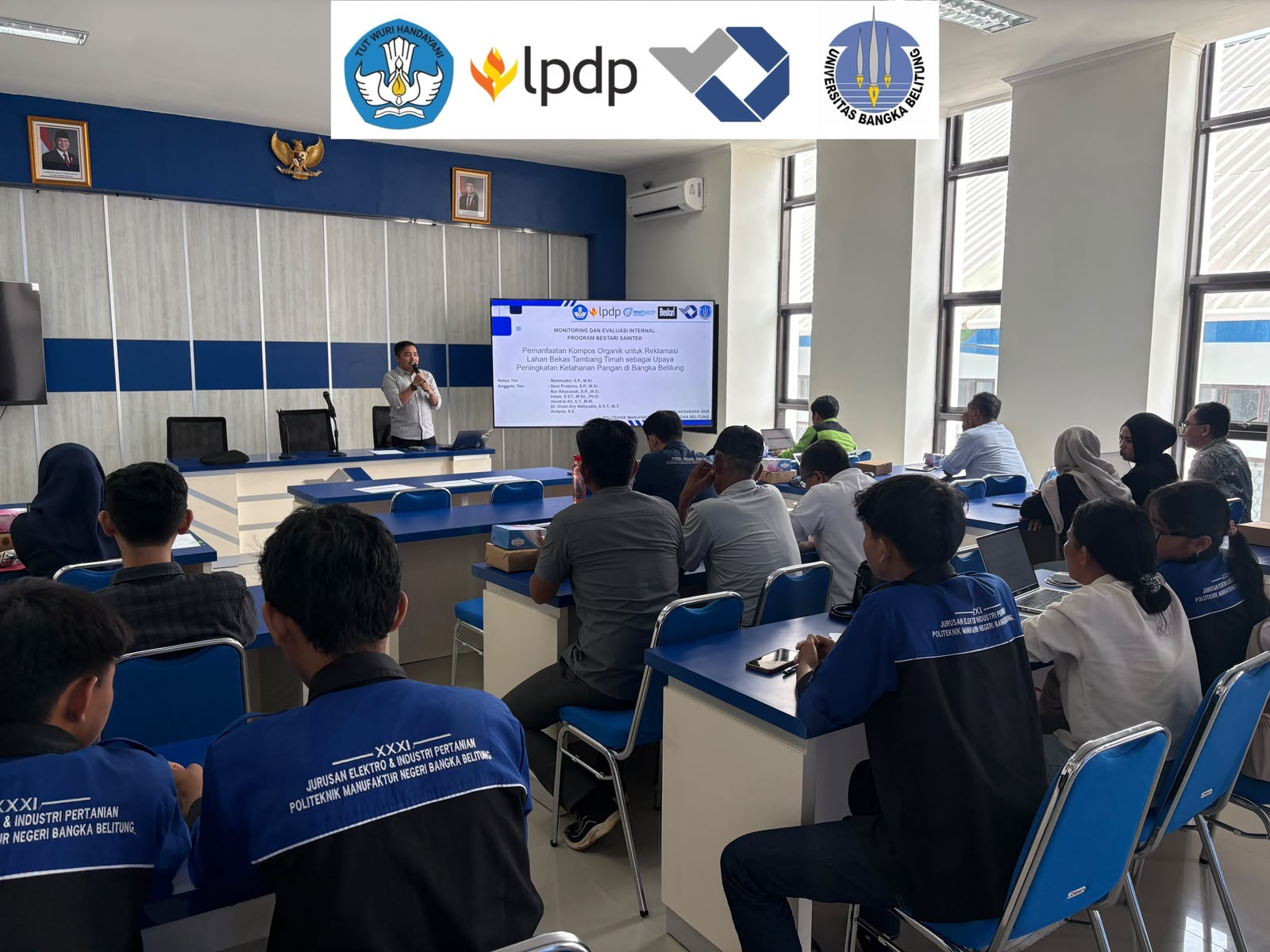
Lead researcher Mahmudin, S.P., M.Si., presented the research progress to reviewers and partners during the monitoring and evaluation session held on the second floor of the Shared Lecture Building.
The internal monitoring and evaluation (Monev) session for the Bangka Belitung State Manufacturing Polytechnic’s "Bestari Saintek" Program (a Science and Technology-Based Living Ecosystem)—specifically regarding the research project on the use of organic compost for the reclamation of former tin mining land to enhance food security in Bangka Belitung—took place at the Joint Lecture Building on Wednesday (October 7, 2026).
The research is led by Mahmudin, S.P., M.Si., with a research team comprising Hendrik Ali, S.T., M.M., Nur Khasanah, S.P., M.Si., Irwan, S.ST., M.Sc., Ph.D., Deni Pratama, S.P., M.Si., Dr. Ilham Ary Wahyudie, S.S.T., M.T., and Andyka, S.E., and involves student Ahmad Desta Ardiansyah.
This program was initiated by the Directorate of Science and Technology Dissemination and Utilization (Dit. Minat Saintek) under the Ministry of Higher Education, Science, and Technology (Kemdiktisaintek), with funding provided by the Indonesia Endowment Fund for Education Agency (LPDP).
The evaluation process involved three reviewers representing the Center for Research and Community Service (P3KM), the Center for Quality Assurance and Learning Development (P2MPP), and the Internal Audit Unit (SPI). The session was also attended by several partners, including the ANW Organic Compost Startup, the Bangka Regency Environmental Agency (DLH), the Kimak Bahrin Lestari Joint Farmer Group (Gapoktan), the Sinar Abadi Joint Farmer Group (Penyamun Village), and PT Timah Agro Manunggal.
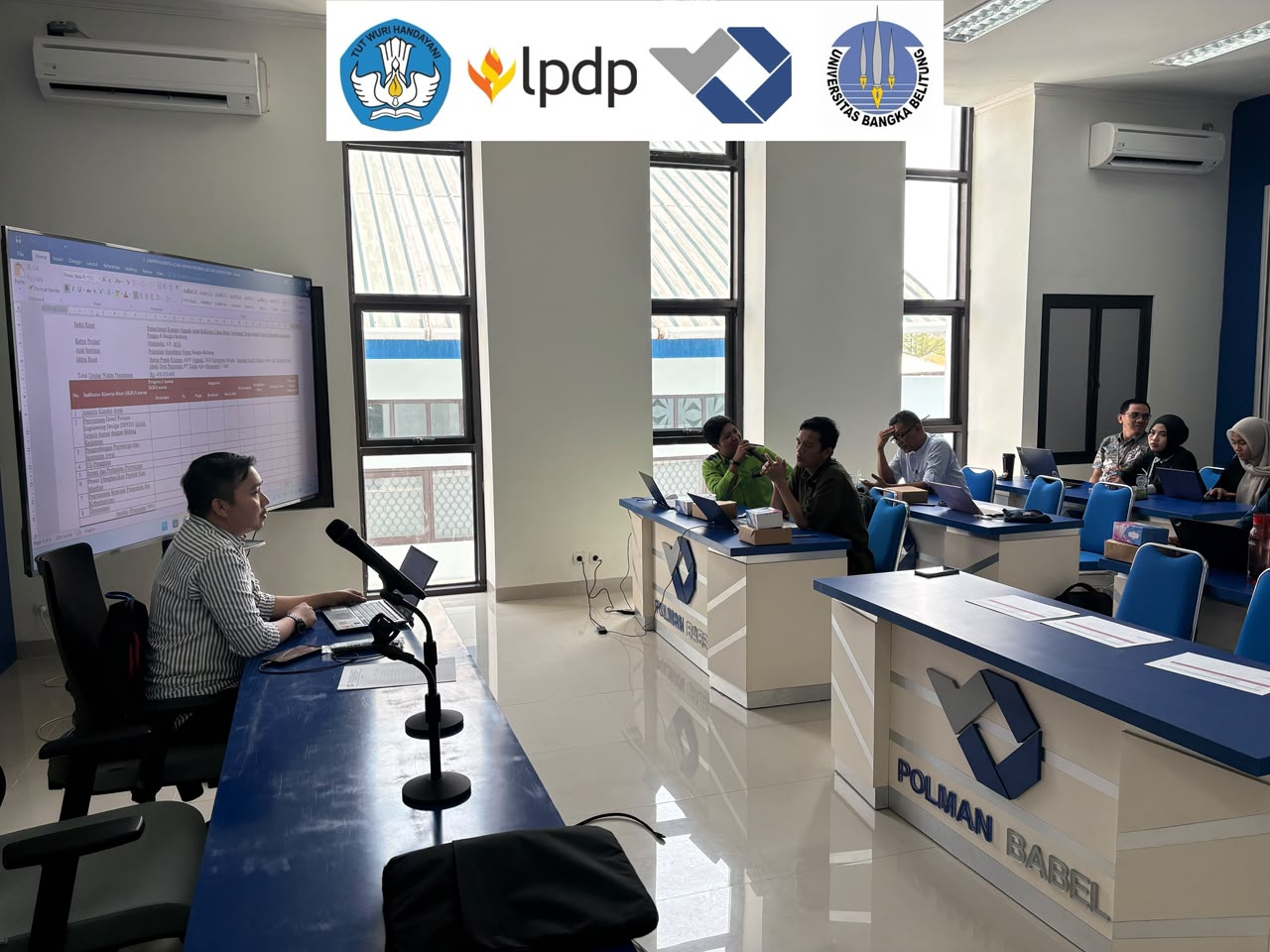
In an interview, the lead researcher, Mahmudin, S.P., M.Si., stated that this internal monitoring and evaluation (M&E) process aims to gather objective feedback from reviewers—not only regarding compost utilization but also on how the developed technology and innovation can serve as a solution for rehabilitating former mining lands while supporting community food security.
Furthermore, this internal M&E activity is crucial for ensuring that the research proceeds according to established targets, outputs, and indicators; the evaluation process provides an opportunity for the research team to receive input and recommendations from reviewers to enhance the quality of the research, the program's sustainability, and its impact on the community.
"I hope for excellent evaluation results from the reviewers; should there be any shortcomings, the necessary revisions will be made. The feedback provided will serve as a basis for the research team to refine the work, addressing both technical research aspects and strategies for disseminating and utilizing the research findings," he emphasized.
Meanwhile, Indra Dwisaputra, S.ST., M.T.—a reviewer and the Head of P3KM—urged that the research outcomes should not be limited to reports or administrative outputs; instead, the research needs to produce models or methods that can be replicated by the community and partners.
"Process documentation, test result data, and sustainability strategies need to be strengthened so that the program's impact is clearly visible," he stated.
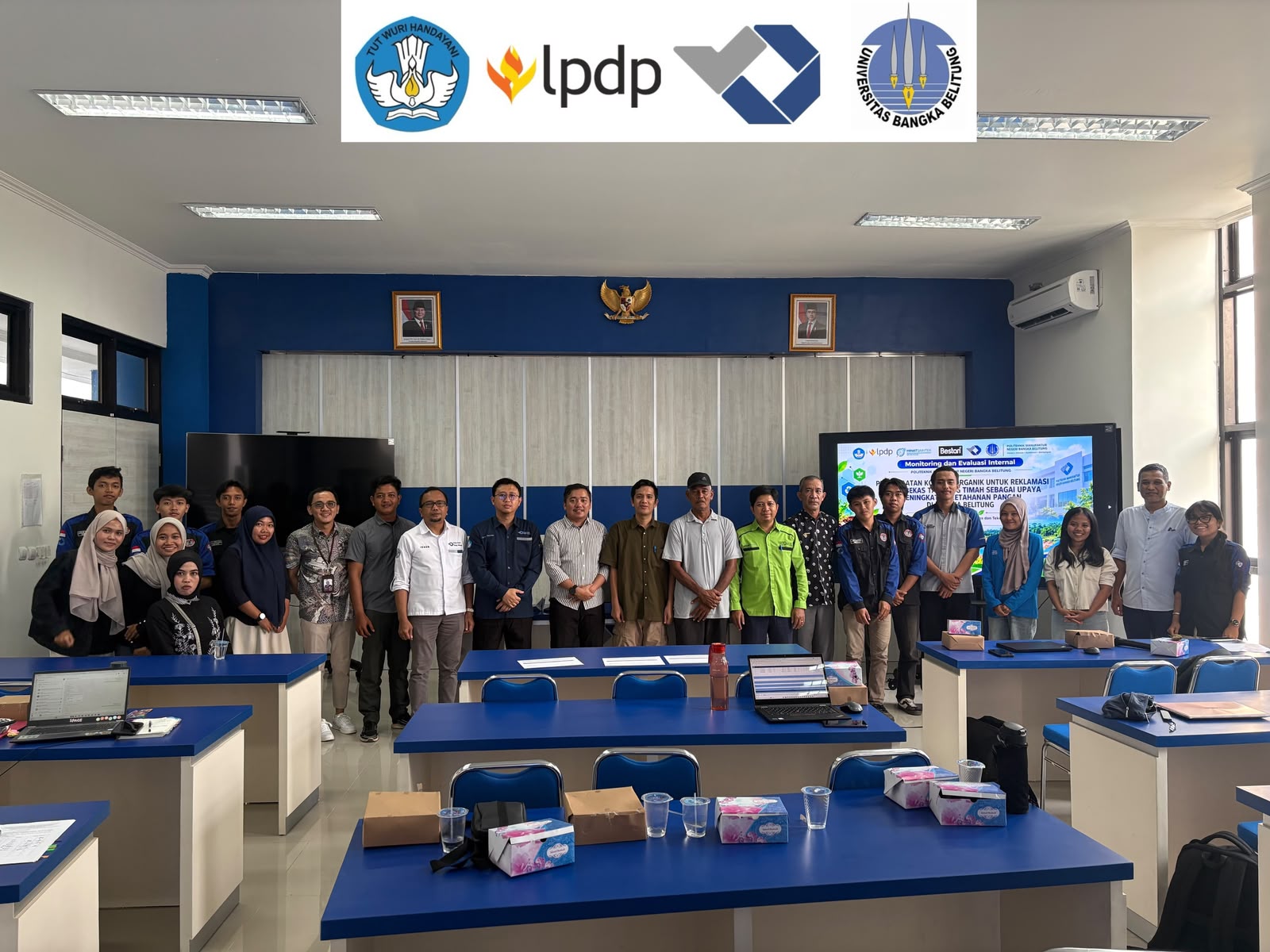
Indra further noted that the research team and reviewers could evaluate achievements and formulate improvements for future program development. This ensures that the research is not merely expected to generate knowledge and innovation but is also capable of delivering tangible solutions for rehabilitating former mining lands, managing the environment sustainably, and strengthening food security in Bangka Belitung.
“It is hoped that the results of this research will yield sustainable benefits and serve as an approach that can be further developed to address community needs,” he concluded.
“Ultimately, this monitoring and evaluation process ensures that the research proceeds in alignment with established targets, outputs, and indicators. By evaluating research achievements, it provides an opportunity for the research team to receive input and recommendations from reviewers, thereby strengthening the quality of the research, the program's sustainability, and its impact on the community,” Indra added.