Highlighting Bangka Compost, the Polman Negeri Babel Research Team Develops QR Code-Assisted Augmented Reality Media
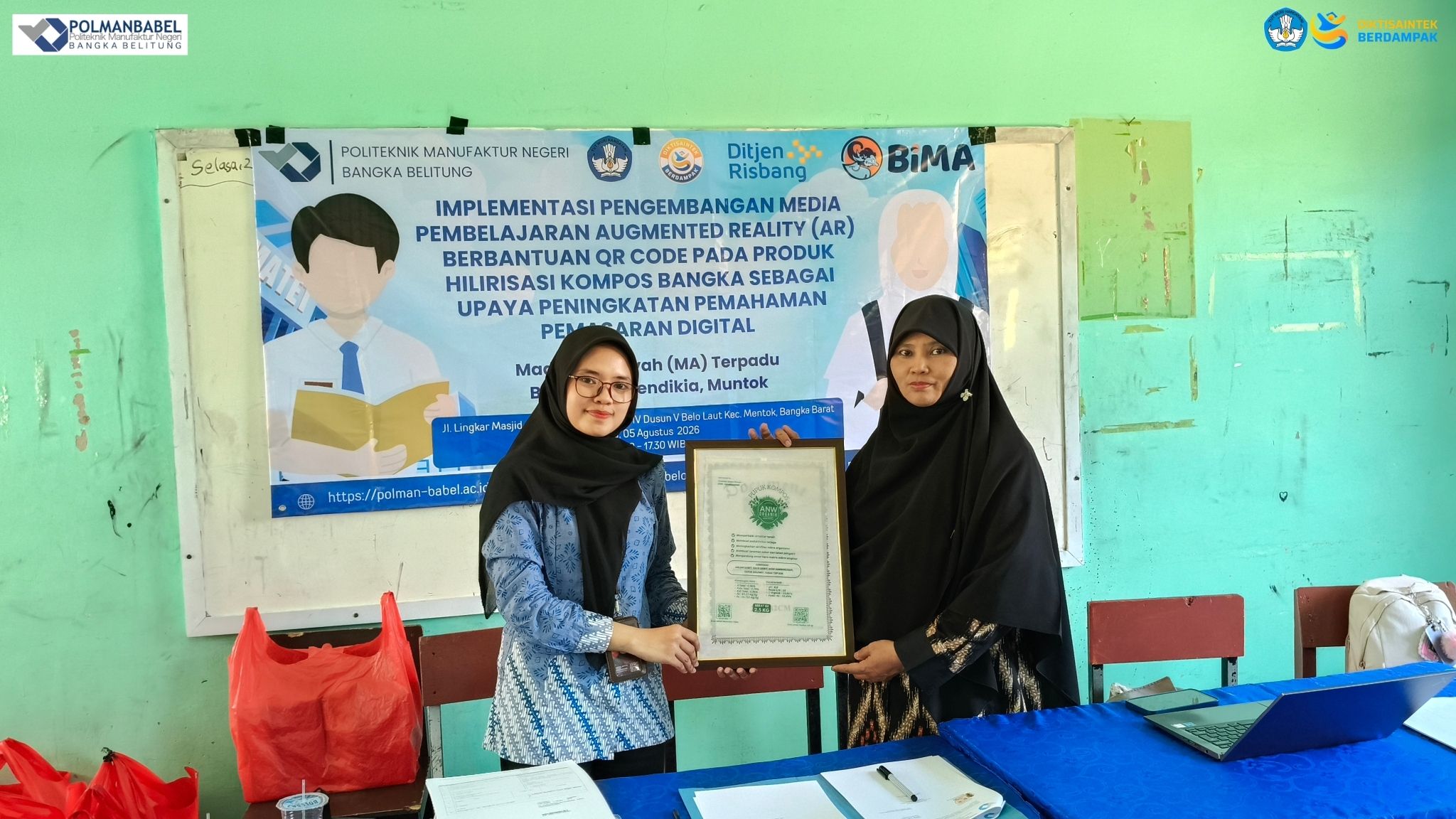
The head of the Polman Babel research team, Ummu Artha Tsary Rumalessin, S.Pd., M.Sc., together with representatives from MA Terpadu Bina Insan Cendikia Muntok.
Under the Novice Lecturer Research Program (PDP), a team of lecturers from the Bangka Belitung State Manufacturing Polytechnic (Polman Babel) developed Augmented Reality (AR) learning media—facilitated by QR codes—that uses "Bangka Compost" (a downstream product) as the context for teaching digital marketing at the *Madrasah Aliyah* (MA) Terpadu Bina Insan Cendikia in Muntok, West Bangka Regency, on Wednesday (August 5, 2026).
The research team comprised lecturers Ummu Artha Tsary Rumalessin (M.Sc.), Lusi Olis Vera (M.M.), and Putri Armelia Prayesi (M.Kom.), and involved two students from the Digital Business and Software Engineering Technology study programs.
The lead researcher, Ummu Artha Tsary Rumalessin (S.Pd., M.Sc.), explained that the development of this media stemmed from the realization that entrepreneurship education in the current digital era requires more than just a focus on creating products with market value; students also need to understand how to build branding and product identity, design attractive packaging, and communicate product value in the digital landscape.
Following the implementation phase, the research team handed over two research-based products designed for use as Augmented Reality digital marketing learning media. These resources utilize the Assemblr Edu platform and can be accessed by scanning a QR code with a smartphone.
"Learning content will appear as 3D visualizations, allowing students to move beyond merely reading text-based material and instead view the content in a more visual, interactive, and engaging way," he said.
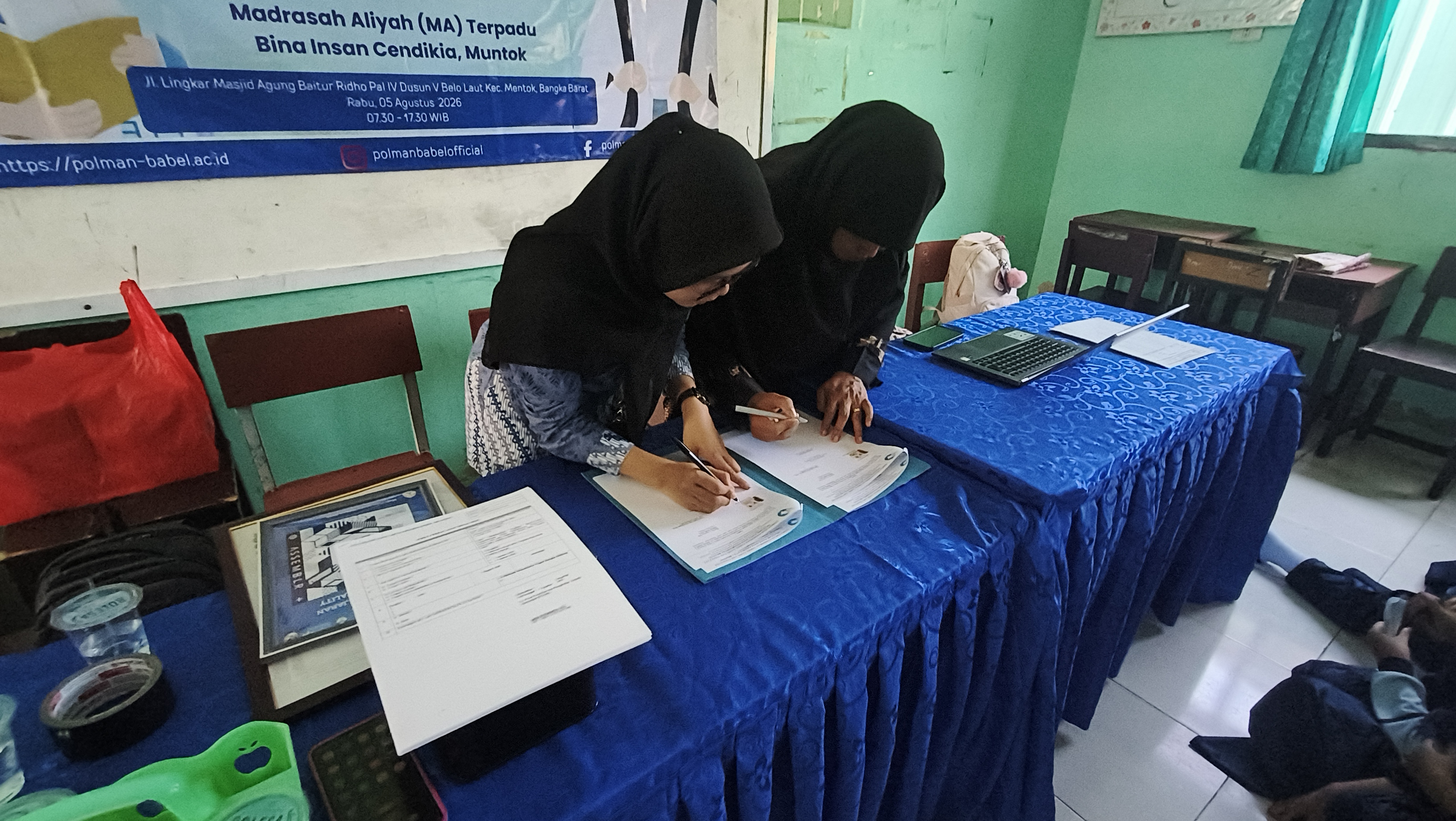
Furthermore, this learning medium introduces students to concepts such as branding, product identity, packaging design, communicating product value, and the fundamentals of digital marketing—all accessible by scanning an AR barcode. Secondly, it serves as an information resource for consumers, buyers, and farmers, enabling them to access detailed product information via a product identity QR code," he explained.
Moreover, the research highlights the advantages of using 'Bangka' compost—derived from processed palm oil waste—as a learning context. This approach not only utilizes a local product but also bridges entrepreneurship education with the economic potential and resources found in the students' immediate environment.
"Students can see that products derived from local resources also offer opportunities for development through branding, packaging design, and digital marketing," he added.
He continued by noting that the initiative aligns with the spirit of the Entrepreneurship Project and the Project to Strengthen the Profile of Pancasila Students (P5), which encourage experiential learning through the creation of work relevant to the environment and real life. The developed learning media are also designed for independent use; by utilizing QR codes, students can access materials digitally without having to rely constantly on teacher explanations," he concluded.