Inaugural Harvest Serves as Basis for Evaluation: State Polytechnic of Bangka Belitung Lecturers Research Organic Compost Development on Former Mining Land
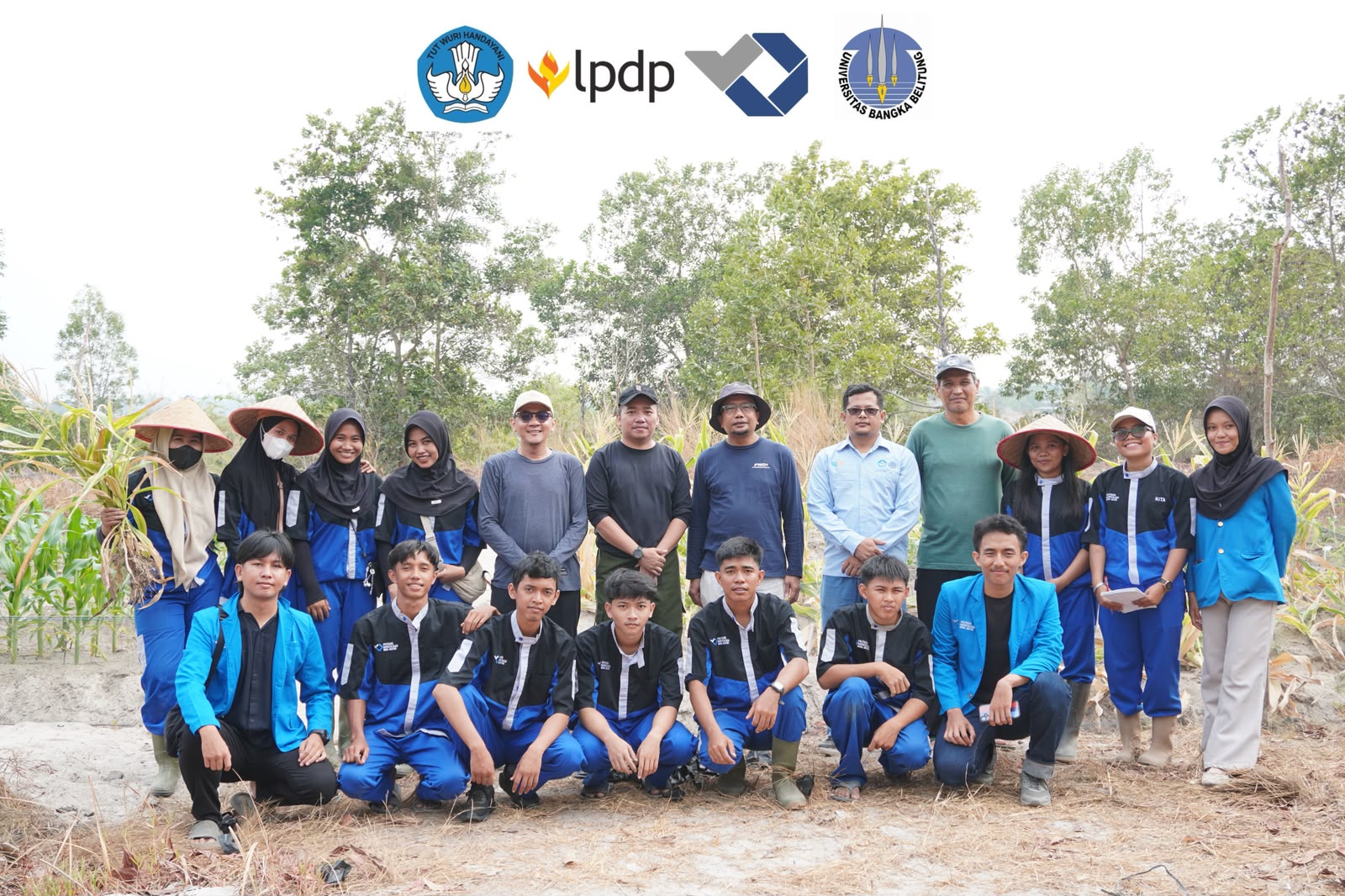
A research team from Polman Negeri Babel, together with students and partners, conducted an on-site inspection of a former tin mining area used as a trial site for organic compost.
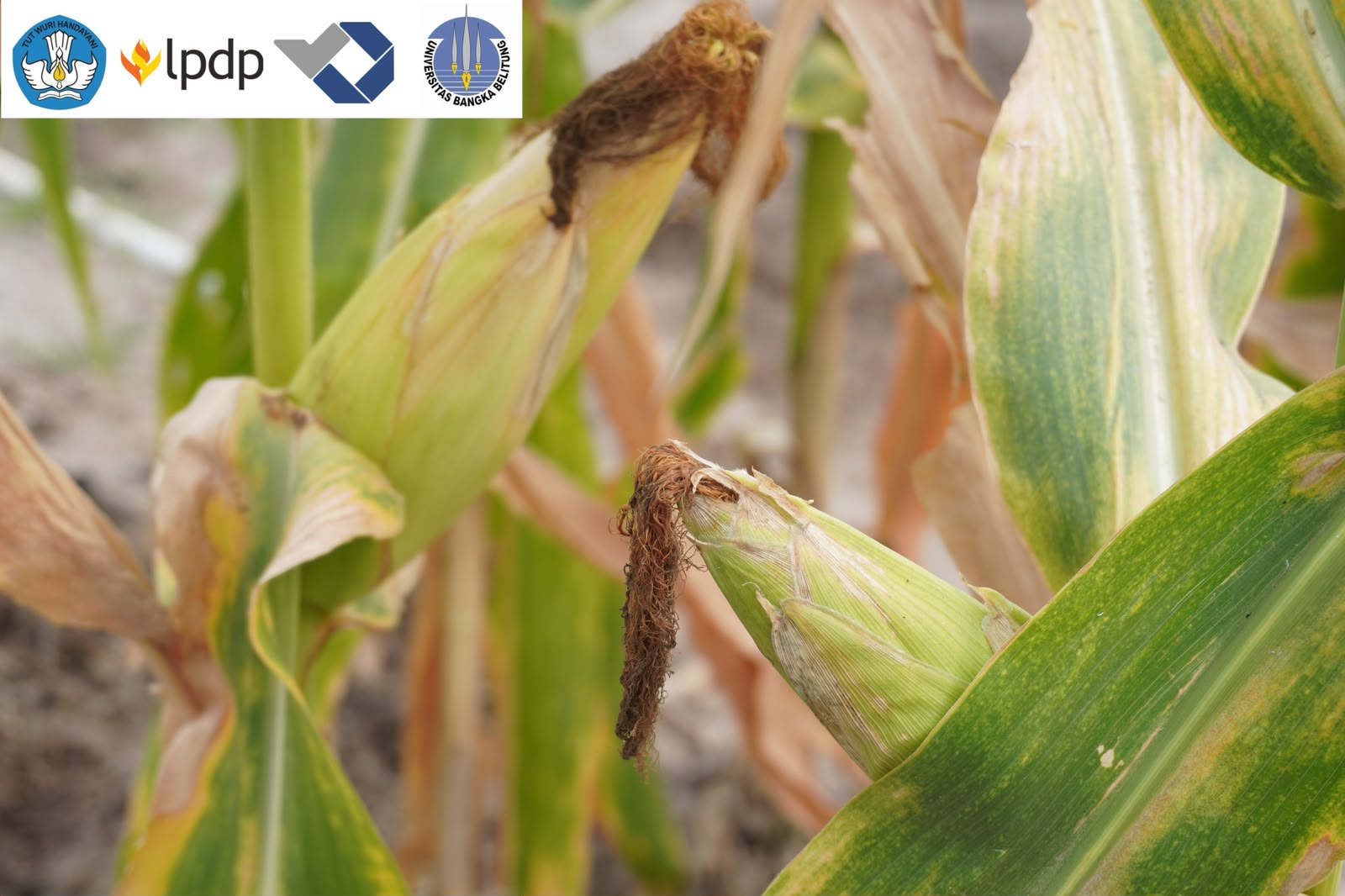
Driven by environmental concern, lecturers from the Bangka Belitung State Manufacturing Polytechnic reached a significant milestone in their research on using organic compost for former tin mining land reclamation. On Saturday (September 26, 2026), they conducted the first harvest and observed the test crops at two locations: Kimak Village and Air Jangkang in Bangka Regency, Bangka Belitung Islands Province.
The research team—comprising Mahmudin, S.P., M.Si., Hendrik Ali, S.T., M.M., Nur Khasanah, S.P., M.Si., Irwan, S.ST., M.Sc., Ph.D., Deni Pratama, S.P., M.Si., Dr. Ilham Ary Wahyudie, S.S.T., M.T., and Andyka, S.E.—focused on utilizing organic compost to reclaim former tin mining land as a means to boost food security in Bangka Belitung. This project is part of the *Bestari Saintek* (Science and Technology-Based Living Ecosystem) program, initiated by the Directorate of Science and Technology Dissemination and Utilization (Dit. Minat Saintek) under the Ministry of Higher Education, Science, and Technology (Kemdiktisaintek), with funding provided by the Indonesia Endowment Fund for Education Agency (LPDP).
When contacted on Monday (September 28, 2026), the lead researcher, Mahmudin, S.P., M.Si., stated that the corn harvest and crop observation represented a crucial stage in the research series. "The results obtained from this first trial phase will serve as the basis for evaluating the next stage of organic compost development," he said.

Furthermore, the first harvest serves not only to assess the corn yield but also to observe how the crops respond to the organic compost applied to the former mining land; meanwhile, the sorghum crop remains in the maintenance phase due to its different harvest cycle compared to corn.
"The data and observations from the corn crop, along with the progress of the sorghum, will serve as a basis for the team to evaluate and determine the long-term direction of the research," he added.
Mahmudin explained that the research is being conducted in stages so that the results of each trial can inform refinements; the development of the organic compost is not based solely on initial formulations but takes into account the results of direct field application.

Meanwhile, Riky Martin, a student involved in the project, noted that his participation provided hands-on experience in understanding the field research process, particularly regarding the agricultural use of former mining land.
"It has been an excellent experience; rather than just studying theory, we can observe the actual condition of the crops and the land firsthand—seeing the corn ready for harvest while the sorghum is still in the maintenance stage," he said.
Equally interesting, the difference in harvest times between corn and sorghum offers students valuable insight into the fact that each crop has distinct growth phases and harvest schedules, necessitating continuous observation.
“Research is a process requiring step-by-step observation; the corn harvest results can serve as a basis for evaluation, while the sorghum crop will continue to be monitored until it reaches maturity for harvesting,” he added.
He further explained that the research must be advanced so that the resulting organic compost can ultimately benefit efforts to utilize post-mining land and support agricultural activities. He noted that the corn harvest results and observations from both sites would serve as evaluation material for the research team.
Meanwhile, fellow researcher and lecturer Hendrik Ali, S.T., M.M., stated that the sorghum crop would continue to be tended and monitored until harvest, as data from this initial trial would form the foundation for developing the second phase of organic compost. "Once development is complete, the next batch of organic compost will undergo further testing to assess crop response and its suitability for post-mining land conditions," he emphasized.
In parallel, the research stages are expected to yield improved formulations and utilization methods for organic compost—tailored to the specific needs of the crops and the conditions of the target land. Beyond generating research data, these activities serve as a learning opportunity for students and strengthen collaboration among the research team, partners, farmer groups, and the providers of the trial sites," he concluded.
In this regard, I would like to express my gratitude to the supporting partner, Startup Kompos Organik ANW, for backing the organic compost research and development activities. I also extend my thanks to PT Timah Agro Manunggal, the Kimak Village Government, and the Kimak Bahrin Lestari Joint Farmer Group (Gapoktan) for their support and for providing the land used as the research trial site. Bridging research activities with real-world field conditions is crucial, and the synergy between the university, partners, and farmer groups must continue to be strengthened to ensure that research findings are effectively utilized for the benefit of the community," he explained.