Deep Learning-Based Road Damage Detection
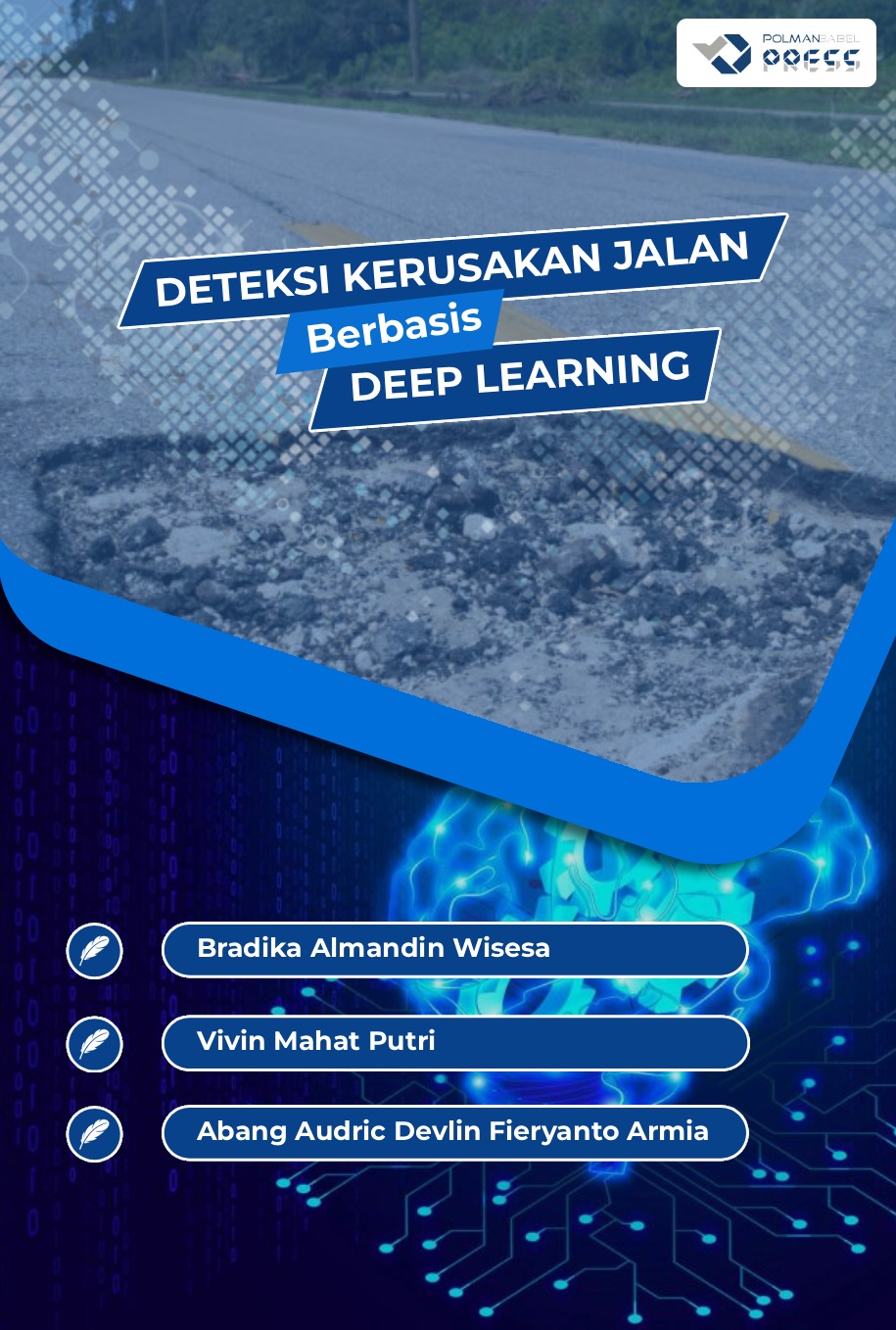
Description :
Digital transformation in road management demands cross-disciplinary skills. Infrastructure officers need to understand how to translate physical road conditions into data, while software developers need to understand that AI model output must be relevant to technical needs, not simply achieve high accuracy scores. This book brings these two perspectives together through a case study of the JELI system.
Readers are introduced to five damage classes: longitudinal cracks, transverse cracks, alligator cracks, other damage, and potholes. The detection system uses YOLOv8n, depth estimation utilizes MiDaS, and severity is determined using Mamdani fuzzy logic. The results are then linked to road condition categories used in road management. The on-device and offline-first approach makes this case study relevant for areas with limited network and server infrastructure.
This book not only explains the system components but also the basis for method selection, implementation limitations, how to interpret evaluation results, and opportunities for development. Thus, readers gain an analytical framework that can be applied to transportation, environmental, agricultural, manufacturing, and other asset inspection management.
Preview